







What Mobility Hub 2026 taught us about managing a mobile workforce
The ECA Mobility Hub took place in September 2026 and brought together mobility leaders from across the UK and Europe to discuss the future of global workforce management.
24 September 2026 | Authors: David Livitt and Tim Jee
At this year’s event, a clear theme emerged – organisations need greater visibility of their people, their movements and the risks associated with an increasingly mobile workforce. Discussions throughout the day highlighted the importance of resilience, flexibility and preparation. For employers managing employees across borders, these qualities have never been more relevant.
Discussions throughout the day highlighted the importance of agility, resilience and flexibility in an increasingly volatile world. For employers managing employees across borders, these qualities have never been more relevant.
The world is becoming more digital, and so are compliance risks
Governments are investing heavily in digital border controls, traveller monitoring, data-sharing between authorities and AI-enabled analytics.
Many organisations still rely on spreadsheets and manual processes to track employee travel. However, tax authorities, immigration authorities and border agencies are increasingly collecting, sharing and analysing traveller data in real time, with AI helping them to identify patterns, inconsistencies and potential compliance risks more quickly. This creates a growing risk gap for employers that do not have clear visibility of where their employees are working.
The challenge extends beyond individual tax compliance. Mobile employees can create immigration, employment tax, social security, payroll and corporate tax implications,. As authorities use more sophisticated technology to interrogate workforce and travel data, employers need to be able to identify cross-border risks before they become compliance issues.
Mobility becoming a strategic business function
Examples shared by leading organisations at the event demonstrated how mobility programmes are wanting to evolve from reactive support functions to strategic tools for talent management. Case studies explored how organisation have benefited from successfully shifted its mobility model away from simply supporting assignments and towards proactively developing talent and supporting wider business objectives.
Rather than using international assignments solely to address short-term business needs, leading organisations are increasingly viewing them as investments in talent development, leadership succession and workforce planning.
This mirrors a broader trend across the market. Global Mobility is no longer just about supporting assignees. It is becoming a key enabler of international growth, talent deployment and risk management.
Better data leads to better decisions
Geopolitical disruption has also reinforced the importance of organisational resilience and accurate workforce data.
The key takeaway was straightforward: poor data leads to poor decisions.
Whether responding to geopolitical events, natural disasters or sudden regulatory changes, organisations need accurate information about where their employees are located and what activities they are undertaking. Reliable location data enables faster decision-making, stronger duty of care processes and reduced business risk.
How can businesses respond?
For many organisations, the challenge is not recognising that cross-border working can create risks. It is identifying when those risks arise and having the technology, policies and processes needed to manage them effectively.
The discussions throughout the day reinforced that organisations need greater visibility over where their people are working, what activities they are undertaking and the potential risks those movements may create. This is relevant to any organisation whose people travel internationally, work remotely, undertake short-term assignments or support overseas projects.
Technology is only effective when it is underpinned by the right technical expertise. At Blick Rothenberg, our Global Mobility team brings together specialists across employment tax, payroll, social security and international tax, helping organisations understand not only where their people are working, but what that means from a risk and reporting perspective. By combining this expertise with BR Navigator, our integrated global mobility platform, we help clients gain clearer visibility of their mobile workforce, identify potential issues earlier and make more informed decisions about how to manage cross-border working in practice.
Would you like to know more?
If you would like to discuss any of the above, please speak to your usual Blick Rothenberg contact or David using the form below.
Contact David

You may also be interested in

2026: Global Mobility at a turning point
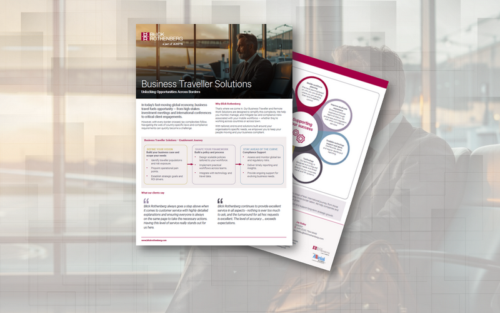
Business Traveller Solutions – Flyer